Tuesday, 17 February 2015

Common Wage and Hour Violation Mistakes that Every Employer Must Avoid


With each passing year, the numbers of wage and hour violation cases are increasing. According to the Fair Labor Standards Act (FLSA), it is mandatory for employers to pay their employees correctly, based on the numbers of hours worked. In case your employer fails to comply with the FLSA guidelines, you have the right to file a legal claim with the assiatance of unpaid overtime lawyers.
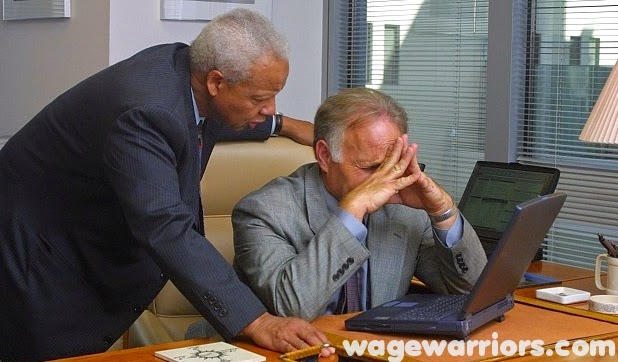
http://wagewarriors.com/ 
To have a better understanding of the wage and hour violations and to ensure that you don’t become a victim, you should go through the information given below.
  • Many employers deliberately misclassify their workers as exempt from overtime and claim they are salaried. However, it is necessary for employers to make sure that the job duties of workers is in accordance with one of the exemptions from overtime, before they can be classified as exempt. The employer must prove the exemption and everyone has a different threshold to meet. Don’t let the employer trick you into thinking you are salaried and not entitled to overtime – in fact, you may very well still be entitled to it.
  • There are certain situations in which employers need to pay for the travel time, but unfortunately, not many employers bother about it. If an employee has been asked to come back at work because of an urgent work, travel time may be compensable in such situations. There are also few other situations when workers are entitled to receive compensation for the travel time. Sometimes going to the first or last job site is not compensable, but traveling to other sites between the first and last generally is.
  • Many employers also take advantage of unpaid breaks. According to FLSA, any break under 20 minutes should be paid. For meal breaks the employee is entitled to a free uninterrupted meal time. If the employer doesn’t pay for meal time, but doesn’t relieve the employee fully from their duties, the employee may be entitled to overtime.
  • Not paying overtime to employees is one of the most crucial wage and hour violation mistakes. However, some of them do it deliberately while others do it unintentionally. Generally, it is done to save money so the owners make more, the shareholders make more or the managers receive a bigger bonus by keeping time under control.
  • Improper record keeping is another mistake which can be used against the employer.


Share:

Wednesday, 28 January 2015

How Human Psychology Encourages Wage Violations?


Cases of employers refusing to pay overtime wages and employees not taking action against it are a normal thing in the work places. Employees may not realize it but psychology plays an important role in increasing the risk of unpaid wages. Human psychology affects the way workers behave in the work place in different situations, whether they are good or bad.
Following factors in the workers’ psychology increases the risk of unpaid wages –
Human are social creatures – It is a common phrase that humans are social creatures. It is in their nature to live in groups and try to fit in these groups. In offices, these human psychology forces employees to try to perform better even in worse situations. Workers try very hard to socialize with others, no matter how hard the conditions are for them. When workers do not take any action against the first unfair situation, it encourages employers do it again and again. It can start with forcing to spend some extra hours in office on a weekend without payment, and can go up to the worse conditions like bosses refusing to pay entire week’s overtime.
If no one else is objecting, then why should I – It is another characteristic of human psychology. Usually, when we see that others are not objecting over unfair conditions, we too refrain from taking any action against it. Slowly, it becomes an unspoken rule of the work place. It can lead to unpaid wages since bosses see that their workers do not complain.
People are habitual – We get used to things/situations in a very less time. Not getting paid for the worked hours or overtime slowly becomes a habit.
Loyalty is in human nature – After working for several months or years in the same office, employees become loyal to the company/boss. It becomes hard for them to protest or sue the company, even in case of unfair conditions. People feel compelled to continue working for their boss even if they are not getting paid fairly.
Due to above mentioned characteristics of human psychology, employees risk being wage victims. If you are not getting paid according to your work hours or extra time, contact overtime lawyers to help protect your rights.
Share:

Monday, 29 December 2014

What Legal Options Do You Have When You are Fired Wrongly?


Every year thousands of cases are filed against employers that unlawfully fire their employees for improper reasons. One of the trending reasons behind such incidents is retaliation after they raise voice for their unpaid and overtime wages. Hence, it is necessary for workers to understand that they are protected from terminations or other punishments after speaking up about their wages if they are shorted their lawful pay.
Getting fair pay is the right of every employee and under no circumstance, they should compromise with it. You are entitled to pay for every hour worked. Anything done for the benefit of the employer, such as security checks, folding napkins, booting up a computer is time that should be compensated. If you have any concerns, consulting a professional overtime attorney is highly suggested.
A professional can explain all the laws that protect you in these situations. You can book a free confidential consultation session to have your present situation evaluated. If they find out that your rights were compromised, and that you were wrongfully terminated, you may receive the following damage coverage.
Front Pay- It includes the coverage of lost future earnings and benefits caused by an illegal termination. The idea of the front pay is to visualize the situation where wrongful termination of the employee did not occur and compare it with the present situation. A front pay award will be allowed, if worker is found getting paid less compared to the payments before the wrongful termination.
Back Pay- It includes the calculation of what the employee has earned after the termination and what they would have earned up to the date of verdict, to calculate the damages. However, in some circumstances, the employer can reduce a back pay award, if employer successful proves that the accuser’s mitigation efforts were not good enough.
Emotional Suffering- This is a tricky issue. Most jurors are not sympathetic with emotional suffering in a commercial or business dispute. If there is some degree of sexual harassment in which an employer coerces an employee for sex as a condition for employment, otherwise known as quid pro quo sexual harassment, the employee may be entitled for this recovery. Employee can also receive a compensation for their emotional suffering. However, it is necessary to present evidence that shows a genuine connection between the emotional pain and unlawful act of the employer. It is understandable that sufferers do not always seek medical help for emotional disturbance, but still some credible evidence of the distress is mandatory.
Share:

Saturday, 13 December 2014

What Options do You Have When You aren’t Being Paid Fairly?

The law clearly states that every employee is entitled to receive pay for every hour worked. Still the number of complaints for overtime violations and pending wages is increasing day-by-day.  This is due to the bad economy.  Ironically, even in a good economy management still tries to maximize profit and mid-level to high level management receive bonuses at the expense of the workers by keeping labor costs to a minimum.

7 most common ways in which employers usually exploit their employee’s rights are-

1. Asking employees to work while they are “off the clock”

2. Asking them to work through their meal breaks

3. Not providing them a free uniterrupted meal breaks

4. Not paying overtime with one and half of their normal pay rate
 
5. Telling workers that work performed on pre-shift/post-shift hours is not compensable

6. Paying them less than minimum wages set by FLSA

Every employee needs to understand that under the Fair Labor Standards Act (FLSA), they must be paid at least minimum wage for normal work hours. Whereas for any work done after their weekly 40 hours’ work, they are entitled to overtime pay. Most of the times, it is calculated by multiplying regular pay rate by 1.5.

If you believe that your rights have been breached, you should seek assistance from a skilled overtime attorney. The overtime lawyer can offer you a free consultation to analyze your present situation and to find out whether you are entitled to file a lawsuit, or not. These wage and hour lawyers may also investigate the matter to determine if this should be filed as an overtime class action, individually, or in some instances not at all. 

They will suggest you to file a lawsuit against the employer after evaluating all the other options. They can protect your rights and help assist you in receiving all owed wages and sometimes it’s possible to receive double or even triples damages with attorney fees paid separately.

Receiving fair pay is the right of every employee and under no circumstance you should compromise on that.

It is strongly recommended to keep track of all your working hours and pay slips to have your situation evaluated properly. It will also support your claims in case you file a lawsuit. Keep policies and procedure manual of your workplace with you to help your attorney with more detailed information.
Share:

Thursday, 4 December 2014

How to Obtain Proper Pay from Your Employer?

Many times, employers cheat their employees on their proper pay just to cut corners and save some money. They take advantage of people holding onto their position in the bad economy and get more work done from employees by making them work extra hours and paying less or no extra money.

Some of the most common employer-employee wage and hour disputes are
  • Paying less than the Federal or State minimum wage
  • Taking a tip credit, but improperly sharing the tips with management
  • Improper or illegal Deductions from wages
  • Paying an improper day rate
  • Not paying overtime
  • Extending shifts without paying for the extra time
  • Not paying for the work done after shift/pre-shift/during meal breaks.
If you too have fallen victim to any of the aforementioned conditions, you should immediately consult an overtime lawyer.

An experienced attorney may provide you with complete information about your labor rights and labor laws. Following are a few situations in which an accomplished employment lawyer can help you fight for your rights -

Wages – You have a right to be paid for all the hours you’ve worked. If an employer makes you work off the clock, or makes you conduct activities such as go to seminars for the benefit of the employer, the employer is generally liable to pay you for that time.

Overtime – If your employer refuses to pay for hours over 40, then the employer must have an exemption to the labor code which can be fairly complicated. In most cases at minimum if an employer wants to pay via a salary, the employee must be guaranteed $455 a week, but there are still other criteria an employer needs to satisfy. For example, did you know that a chef may properly be paid a salary, but a cook may not!  It’s those subtle distinctions why you should speak with an experienced lawyer who can educate you on your overtime rights.

Improper Deductions – If an employer mandates you use their tools and then deducts it from your pay you may be entitled to obtain that money back. Imagine showing up for a desk job and then an employer charging you to use the computer so you can work? There’s no end to the type of ruses employers use to deprive you of pay, but some deductions are appropriate and some aren’t.

If you are a victim of wage theft, then you should consult with an experienced employment and labor lawyer immediately. Many lawyers offer legal help without any upfront payment.
Share:

Thursday, 16 October 2014

FAQs For Unpaid Wages Lawsuit

What are unpaid wages?

The part of your pay that has been incorrectly withheld by employer is called unpaid wage. It can include commissions, vocational pay, overtime money, bonus or simply a paycheck which the company did not pay.

Who is entitled for overtime pay?

Apart from the job profiles that are exempted, all employees are entitled for overtime pay. In case of any ambiguities in this aspect, talk to an unpaid overtime attorney.

What if an employee agrees to work extra hours, but the employer doesn’t pay for it?

That would be illegal. Every company is required to maintain records of the number of hours worked by their employees and their corresponding pay. It is not the employees’ responsibility to maintain these records. If the management fails to maintain such records, lawsuit can be filed against the company.

How much money can an individual receive if he wins the overtime lawsuit?

If an employee has filed the petition, he stands a chance to get lot more than just his unpaid wage. He is potentially entitled to receive unpaid overtime salary that he should have been paid, the interest on that amount, and his lawyer’s fee. In few cases, individuals also receive additional amount that is called liquidated damage.

Liquidate damage doubles the unpaid wages amount. For instance, if your company owes your $10,000 worth of unpaid salary and if you end-up getting liquidate damage, your company will have to pay double the money which amounts to $20,000.

In most of the cases people are entitled to receive liquidated damages, except for the situations where employer is able to prove his acts were in good faith. 

How many years’ overtime can an individual claim for?

The FLSA says that an employee can claim last two years’ unpaid wages from the time of the filing the lawsuit. In few cases, this period can be extended to three years, if employer willfully failed to pay the money.
Share:

Tuesday, 2 September 2014

Know Your Rights to Get Fair Wages!


Every citizen of the United States has some fundamental rights, which they must be aware of. One such fundament right says that all the workers must be compensated fairly for their labor. According to this right, not only do salaried individuals stand to receive their monthly income, they may also be entitled to receive payment for extra working hours.
It is of paramount importance that every worker knows what rights are to protect oneself from being exploited by an unscrupulous employer. Knowing the law and how it pertains to overtime is essential otherwise, dishonest employers will find it very easy to trick you and keep you deprived of your rightful money.
Laws regarding overtime were constituted in the 1930s in order to protect workers from greedy employers. The economy has come a long way since then, and with the evolution of the economy some employers have tried to fairly coincide with the laws, while other evolve to find ways to deprive employees of the money that this theirs and feast on it for their own gluttony and greed.
The rules regarding overtime in the US are simple. The Fair Labor Standards Act says that if someone works beyond forty hours a week, the worker must be paid overtime, unless they have a lawful exemption from overtime. If there is an exemption, the employer has the burden of justifying it and sometimes that is a very complicated road to hoe.
To calculate the overtime, an employer will have to first calculate a worker’s standard hourly wage. Beyond 40 hours, workers must be paid 1.5 times of that standard hourly wage rate. Let us understand this with an example. If you are an employee who makes twenty dollars an hour, then according to this fair wages rule, you must be paid thirty dollars for every single hour beyond standard working period, which is 40 hours. Sometimes, the worker is also paid things like night differential or other premiums which must be factored into the overtime calculus. If it’s not there’s a violation that’s actionable.
Some professionals are exempted from this privilege. The FLSA has put a few occupations under the exempted category (meaning people in those professions do not stand to receive overtime compensation). The FLSA puts people into this category whose job and work responsibilities are managerial or executive in nature. Oftentimes, though, they falsely use this so one must speak to a professional to understand whether you should be paid overtime. For example, if you’re an account manager, but no one reports to you, you are probably are not properly classified as exempt from overtime under the professional exemption.
Sometimes a job title can be quite vague, which creates a loophole for companies to take unethical advantage of it. Companies do that by making employees work for more than standard hours, by making their job profile look ambiguous and considering them as exempted employees, even when they are not. If you feel you are being victimized the same way, you can hire an unpaid overtime lawyer to claim the unpaid compensation that belongs to you.
Share:

About Wage-Warriors

They are the most professional overtime law firm in the USA, providing the top level and reliable solution for the cases related to the unpaid overtime.